Bactrim Dosage For Dogs: Chart, Calculator & Safe Dosage Guide
(SMZ-TMP) Bactrim Dosage For Dogs Calculator
© medsdog.com
Once your dog is diagnosed with a bacterial infection, to treat it safely and effectively, it is a must to get the correct dose of Bactrim dosage to give your dog. A common veterinary antibiotic prescription is Bactrim for dogs, which is also called a combination of sulfamethoxazole and trimethoprim (SMZ-TMP), and is used to combine two strong medicines to increase the antibacterial ability and decrease resistance.
TMS or Tribrissen is also known as a medication that is administered to dogs and cats to treat a broad spectrum of infections, including respiratory infections, urinary tract infections (UTIs), skin diseases, gastrointestinal diseases, pneumonia, prostatitis, kennel cough, and otitis externa.
Since this is a prescription only drug, it should never be administered outside of veterinary supervision in order to prevent any underdosing, overdosing, or failure of the treatment. SMZ-TMP is a dependable medication that is available in tablet form and is normally sold in single tablet doses, but it is not effective in all bacterial infections unless taken properly.
In this guide, you will know all you need to know about Bactrim Dosage For Dogs, its mechanism of operation, the basics of how to give it, the main benefits and safety considerations you should adhere to in order to keep your dog healthy and safe.
Disclaimer: This guide is for informational purposes only and is not a substitute for professional veterinary advice.
Always consult your veterinarian before giving Bactrim or any medication to your dog.
Key Takeaways
- Antibiotic that is effective against the various bacteria and protozoal infections with a wide spectrum.
- Manages respiratory, UTIs, skin, and gastrointestinal infections, etc.
- Trimetethoprim and sulfamethoxazole are also used together to increase the general antibacterial effects.
- Frequently used in veterinary medicine even though it is not approved by the FDA to be used in pets.
- Given orally in the form of tablets or liquid with or without a meal and the dogs should have access to fresh water.
- The dosage varies according to the type of infection, weight of the dog and response to treatment; typically 13 mg/lb at every 24 hours.
- Possible side effects are allergic reactions, gastrointestinal upsets, exhaustion, and hypersensitivity to sunlight.
- Blood counts, tear production and thyroid functioning could be monitored as part of long-term therapy.
- Medication is to be kept at room temperature in a tightly sealed container, and not in contact with moisture and heat.
- Dose, duration and administration should always be taken as prescripted by the veterinarian to improve safety and effectiveness.
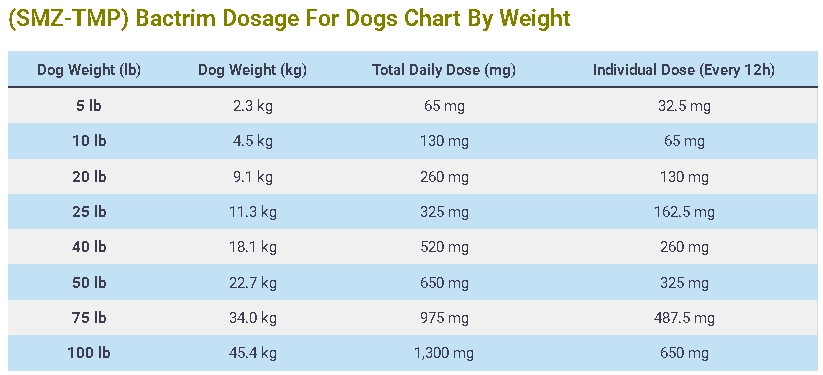
(SMZ-TMP) Bactrim Dosage For Dogs Chart By Weight
According to the typical veterinary instruction of 13mg/lb of body weight (total dose daily), the following is a fast-reference table of typical dog weights. In this table, it is assumed that the daily dose is divided into two doses (administered after every 12 hours).
| Dog Weight (lb) | Dog Weight (kg) | Total Daily Dose (mg) | Individual Dose (Every 12h) |
| 5 lb | 2.3 kg | 65 mg | 32.5 mg |
| 10 lb | 4.5 kg | 130 mg | 65 mg |
| 20 lb | 9.1 kg | 260 mg | 130 mg |
| 25 lb | 11.3 kg | 325 mg | 162.5 mg |
| 40 lb | 18.1 kg | 520 mg | 260 mg |
| 50 lb | 22.7 kg | 650 mg | 325 mg |
| 75 lb | 34.0 kg | 975 mg | 487.5 mg |
| 100 lb | 45.4 kg | 1,300 mg | 650 mg |
Important Administration Notes
- Tablet Fractions: When the Individual Dose does not correspond to your tablet size (480 mg or 960 mg), then you might have to use a pill cutter in order to get the nearest quarter or half-tablet.
- Hydration: Bactrim Dosage For Dogs is released via the kidney. The access to an abundant amount of fresh water is crucial to ensure that your dog does not develop crystals in the bladder.
- Vets First: These values are estimated mathematically. Depending on how serious the infection is (e.g. simple UTI and deep skin infection), your veterinarian could change the dosage either up or down.
What is Bactrim (Sulfamethoxazole and Trimethoprim) Tablets (SMZ-TMP)?
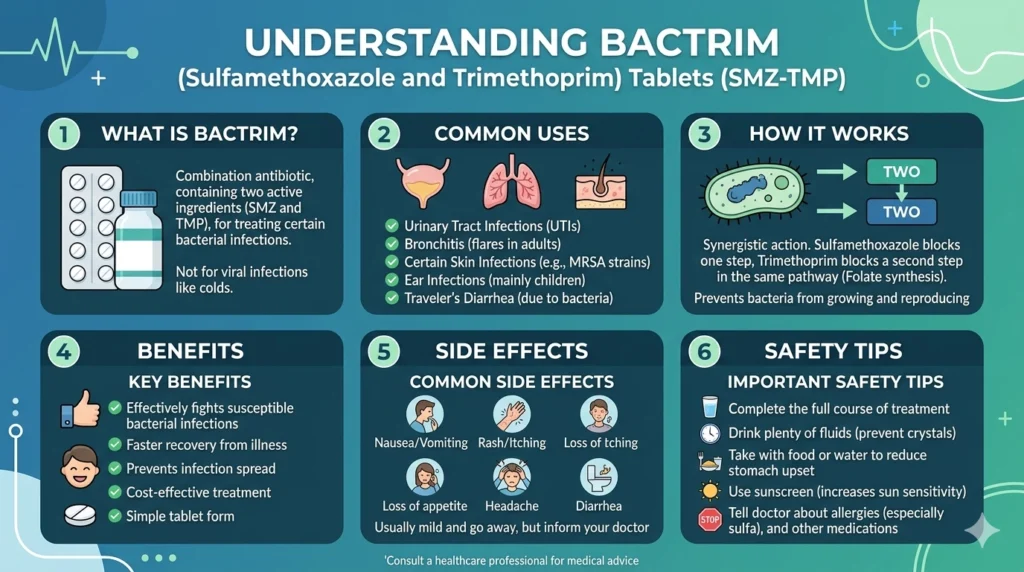
Sulfamethoxazole and Trimethoprim Tablets (SMZ-TMP) is a combination antibiotic or TMS, tribrissen, in dogs and cats as a treatment of a wide variety of bacterial infections. This is a potentiated sulfonamide that is a mixture of two antibiotics trimethoprim and sulfamethoxazole to produce a dual-action effect that prevents the production of bacterial folic acids effectively preventing the growth and further spreading of infection.
The tablets are also regularly prescribed to address the infections of various body systems and only through veterinary prescription, and they are usually sold individually.
Their use has been viewed as off-label (extra-label) in veterinary medicine, whereby their use is required to be closely supervised by the pet owner under the directive of the veterinarian since what is said in the label may not be what the veterinarian wants the pet owner to do.
Widespread Uses and Indications:
- Breathing diseases (such as pneumonia and kennel cough)
- Cystic infections of the urinary tract and bladder.
- Infection of skin (such as staphylococcal infections).
- Gastenteritis (enteritis) infections.
- Hearing problems (otitis externa and otitis media)
- Prostatitis
- Coccidiosis and some parasitic diseases.
- Nocardia infections
All in all, SMZ-TMP is a highly effective antimicrobial agent that can be used in the treatment of bacterial infections in dogs and cats when used properly under the supervision of the veterinarian.
Uses of Bactrim Dosage for Dogs
Trimethoprim and Sulfamethoxazole (Bactrim) dose is commonly used to treat dogs (and cats) to treat several types of bacteria and some parasitic infections in which the susceptible organisms are involved. It is a combination antibiotic that is active against infections of the different body systems and is usually used by veterinarians to treat specific infections.
Uses: Dogs are also susceptible to common usage:
Urinary tract infections (UTIs) that are caused by susceptible bacteria like the following: E. coli, Klebsiella and Enterobacter.
Gastrointestinal infections such as enteritis due to such organisms as Shigella.
- Infections of the respiratory tract such as pneumonia and kennel cough (Bordetella bronchiseptica).
- ear infection especially otitis media.
- Prostatitis (prostate infections)
- Coccidiosis (a parasite intestinal disease)
- Infection of the skin particularly the staphylococcal infections.
In general, Bactrim For Dogs Dosage is a very multidrug that is applied to treat a wide range of infections in dogs in case the bacteria is vulnerable to this medication.
Benefits of Bactrim Dosage (Trimethoprim and Sulfamethoxazole) for Dogs
Bactrim dose for dogs (Trimethoprim and Sulfamethoxazole) has multiple advantages to dogs and is thus a popular and useful veterinary antibiotic. This combination provides a wide-spectrum coverage, which assists in treatment of a large variety of bacterial and some protozoal infections, such as respiratory, urinary tract, skin, and gastrointestinal tract infections.
One of the greatest strengths is that it has a dual-action formula, in which trimethoprim acts synergistically with sulfamethoxazole to increase antibacterial activity and improve the treatment outcomes.
Furthermore, Bactrim is also characterized by the fact that it comes with a twice-a-day dose, which is very convenient, and the owners of the pets can easily use it to administer to their dogs and maintain their medication schedule.
How (Trimethoprim and Sulfamethoxazole) Bactrim Works in Dogs
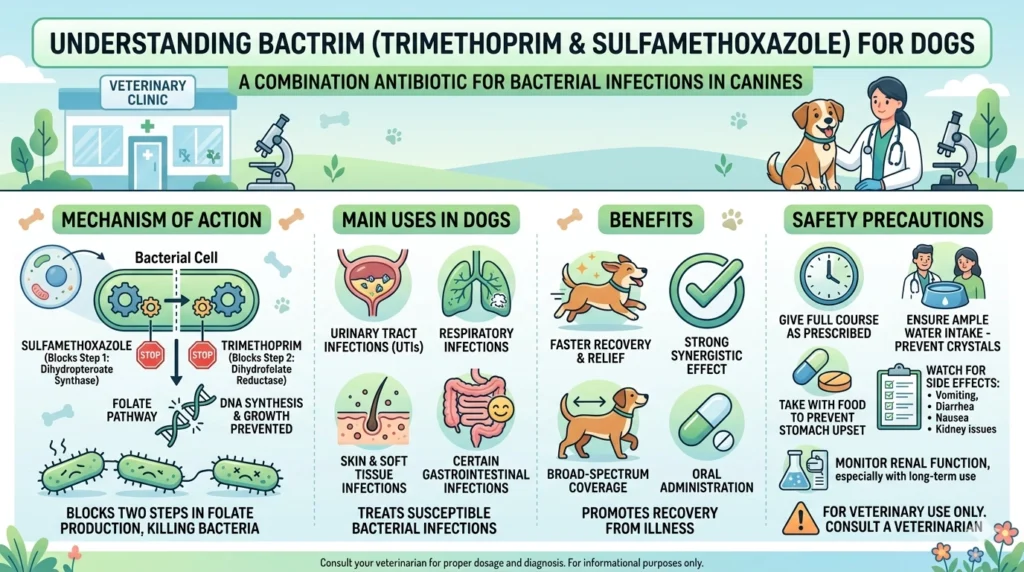
The antibacterial action of Bactrim (Sulfamethoxazole and Trimethoprim -SMZ-TMP) happens in two folds by attacking and interfering with the survival processes of bacteria, which are vital. This combination antibiotic prevents the production of folic acid which is essential in the bacterial DNA production and protein production which eventually prevents the growth and proliferation of infection.
The Dual Mechanism Process:
- Sulfamethoxazole: Competition with para-aminobenzoic acid inhibits the synthesis of dihydrofolic acid, which restricts the growth of bacteria.
- Trimethoprim: Prevents the conversion of dihydrofolic acid to tetrahydrofolic acid by preventing the action of the enzyme dihydrofolate reductase.
- Combined Effect: Interferes with two sequential events of folic acid metabolism, which make nucleotides required to replicate DNA.
This selective action enhances the usefulness of the drug since trimethoprim attaches better to bacterial enzymes as compared to the mammal enzymes hence enhancing the safety and treatment of the bacteria.
Additional Important Information:
- Medication that comes by prescription of a veterinarian.
- Usual brand names: Bactrim, Bactrim DS, Septra, Septra DS.
- Cautions:
- It should not be used in pregnant or lactating animals.
- Make sure that your dog is well watered.
- In case of any abnormal side effects, report them to your veterinarian as soon as possible.
In general, the combination of the mechanisms of Bactrim is a powerful and effective method of managing bacterial infections in dogs when properly used under the conditions of a veterinary.
Uses of Bactrim Dose (Trimethoprim and Sulfamethoxazole) for Dogs
The common combination antibiotic among dogs (as well as cats) is Bactrim (Trimethoprim and Sulfamethoxazole) which is used to treat various bacterial and some parasitic infections caused by susceptible organisms. Veterinarians are commonly prescribing this as a treatment of multiple body systems infections.
Weaknesses:
- UTI due to bacteria E. coli, Klebsiella, and Enterobacter.
- The intestinal diseases, such as the enteritis by organisms such as Shigella.
- Lung diseases, e.g. pneumonia and kennel cough (Bordetella bronchiseptica).
- Ear congestion, especially otitis media.
- Prostate infections (prostatitis)
- Coccidiosis is an intestinal infection that is parasitic.
- Infection of the skin, particularly of the staphylococcal infections.
In general, Bactrim for dogs is a potent and a flexible drug used in the treatment of a wide variety of diseases in dogs in case the pathogenic agents are vulnerable to this antibiotic combination.
Potential Side Effects of Trimethoprim and Sulfamethoxazole (Bactrim) for Dogs
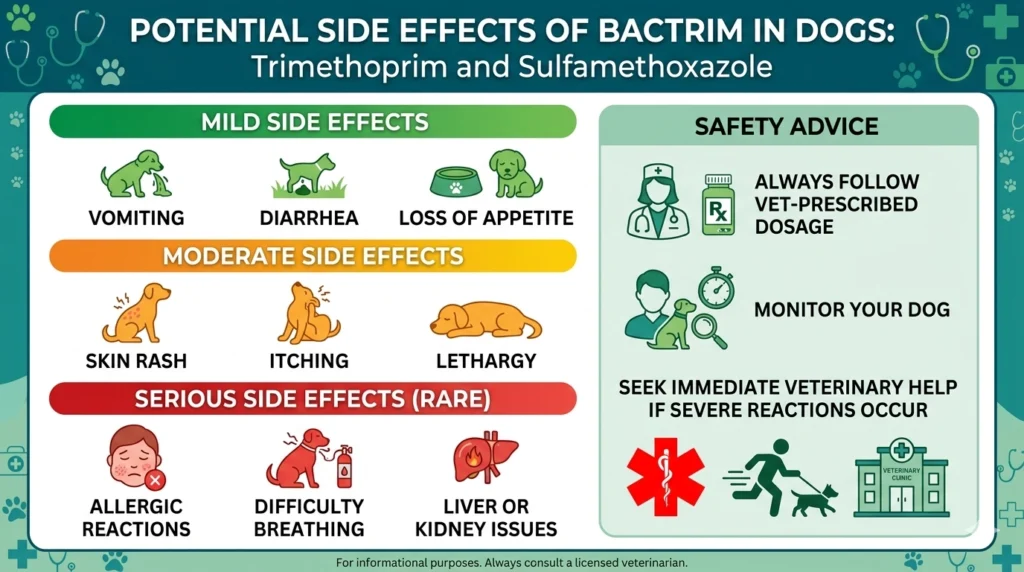
Trimethoprim and Sulfamethoxazole (SMZ-TMP) are usually harmless to the dog when administered by a veterinarian, but the formulations have a production of various side effects in certain dogs. These effects could be lame to a severe effect that needs close observation in the course of treatment.
Common Side Effects:
- Decreased appetite
- Vomiting and nausea
- Diarrhea
- Fatigue or weakness
Serious Side Effects (Immediately to Veterinary):
- Everything mentioned above (difficulty breathing, face/lips/tongue swelling, hives) is an allergic reaction.
- Abrasive bleeding or bruise.
- Whitish of skin or eyes (liver problems)
- Elevated temperature or downness of the face.
- The worst skin reactions/rashes.
Less Necessary, Yet Noteworthy Effects:
- Long-term use Dry eye (keratoconjunctivitis sicca).
- photosensibility When sunlight is exposed to the skin it becomes very sensitive.
- Swollen and painful joints (arthritis) and stiffness.
- Kidney complications, such as excessive thirst/urination or urinary crystals (in particular, in case of dehydration).
- Heptatotoxa or inflammation of the liver.
- Hypothyroidism after long-time satisfaction.
Blood and Immune System Effects:
- Anemia (pallid gums, fatigue)
- Platelets (bleeding) Low platelets
- Lymphocytosis, infection risk Low white blood cells (infection risk)
- Allergy to different immune or hypersensitivity reactions.
Other Possible Effects:
- Neurological (ataxia, dizziness, few seizures);
- Stomach trauma or ulcer of the stomach.
- Breathing difficulty (cough, respiratory problems).
- Hypokalemia, hyponatremia, etc.
Additional Considerations:
- Should not be used in pregnant animals or those animals which have known allergic reactions to sulfa.
- Make sure that the body is well hydrated to eliminate chances of urinary crystals.
- The prolonged use can possibly influence concentrations of thyroid hormone levels.
- Discontinue medication and seek the advice of your veterinarian in case of unusual and severe symptoms.
All in all, SMZ-TMP is effective but needs to be used with care and attention just to make sure that your dog is safe.
Drug Interactions of Bactrim (Trimethoprim and Sulfamethoxazole) in Dogs
The Trimethoprim and Sulfamethoxazole (Bactrim) may have interactions with other drugs and therefore, one should always consult his or her veterinarian before administration. The interactions that are associated with drug may impact the functionality of Bactrim dose or lead to enhanced side effects.
Interactions between Drugs that Are most important:
- Interactions with hepatic metabolisms: Bactrim Medication has the potential to alter phenomenon of phenytoin metabolism and has an influence on its level.
- Interactions with proteins: Sulfonamides have the potential to release methotrexate off plasma protein binding positions, and this raises the levels of free methotrexate.
- Anticoagulants: The prothrombin time can be increased.
- Immunosuppressants: Reduced therapeutic efficacy on combination with cyclosporine.
- Diuretics: Increased susceptibility to thrombocytopenia with purpura (seen in human beings).
- Sulfonylureas: It can enhance the hypoglycemic effect.
- Zidovudine: There are chances of high serum levels.
Other Medications to be used with Caution:
- Amantadine
- Antacids
- Potassium supplements
Important Guidelines:
- Should your dog be on any medications, vitamins or supplements or even herbal treatment, it is always important to notify your veterinarian before taking Bactrim.
- Injections should not be used with other medications in order to avoid incompatibility.
Bactrim for dogs by weight can be safely and effectively administered to treat the infections of your dog by taking care of the possible interactions.
How Trimethoprim & Sulfamethoxazole (Bactrim) is Supplied for Dogs
To meet the requirements of different treatment options and animal sizes, Trimethoprim and Sulfamethoxazole (Bactrim) comes in various human and veterinary formulations.
Human Preparations:
- Tablets:
- Trimethoprim sulfamethoxazole 80mg/ 400mg.
- Trimethoprim / sulfamethoxazole 160 mg / 800mg.
- Oral Suspension: 40 mg trimethoprim / 200 mg sulfamethoxazole in 5 ml.
- Injection:
- Trimethoprim / Sulphamethoxazole 6 mg/mL /80mg/mL per 5 mL.
- Trimethoprim / Sulfoxamethoxazole 80 mg/mL/ 400mg/mL/ 5 mL.
- Powder: 67 mg of Trimethoprim /333 mg Sulfamethoxazole per gram.
Veterinary Preparations Dog and other animals:
- Tablets:
- Trimethoprim sulfamethoxazole 5 mg/25mg.
- 20 mg of Trimethoprim and 100 mg of sulfamethoxazole.
- Trimethoprim sulfamethoxazole 80mg/ 400mg.
- 160mg trimethoprim 800mg sulfamethoxazole.
- Oral Paste (in horses): 67mgtrimethoprim/ 333mg sulfamethoxazole.
- Injection (in horses): 48per cent solution in 100 mL tubes.
These different formulations enable the veterinarians to be able to administer correct doses according to the weight of the animal, the species, and the condition and thus the treatment of bacterial infection is safe and effective.
(Trimethoprim & Sulfamethoxazole) Bactrim Dosage for Dogs
Bactrim (Trimethoprim/Sulfamethoxazole) is a medicine that is given as prescription to treat various types of bacterial infections in dog. It is necessary to take proper dosing at the right time, which must be prescribed by a veterinarian.
Recommended Dosage Guidelines:
- Normal dosage: 12.5- 50 mg/kg (25- 100mg/kg) divided into 24 hours.
- The ratio of trimethoprim-sulfadiazine: 1:4 in veterinary preparations.
- Routes of administration: PO, SC, IM or IV.
- Average length of treatment: 1020 days depending on the type of infection, reaction to therapy and side effects.
Important Considerations:
- Do not stop the treatment course until it is finished even when your dog seems to be feeling better to prevent the relapse and antibiotic resistance.
- See that your dog is kept in supply of fresh water at all times in order to minimize the chances of urinary or bladder crystals.
- The dosage can be varied based on the condition that is being treated, the weight of your dog and your general health.
- Never take any medicine without consulting your veterinarian.
When correctly followed, these dosing instructions will make Bactrim safe, effective, and well-tolerated in dogs and reduce any possible side effects and complications.
Risk Factors for Using Bactrim in Dogs (Trimethoprim & Sulfamethoxazole)
Although Bactrim (Trimethoprim/Sulfamethoxazole) is considered a successful antibiotic, some dogs are considered more susceptible to adverse effects, and some are to be taken with care.
Dogs: dogs should not be put on Bactrim:
- The dogs with liver tissue injury.
- Dogs that have blood cell complications.
- Dried-up dogs.
- The dogs that are at risk of more urinary stones.
- Sulfonamide- allergic dogs or pets.
- Dogs towards termination of pregnancy.
Dogs Requiring Caution:
- Dogs that have liver/kidney disease.
- Old pets, ailing pets, and pets that can no longer move.
- Dogs deficient in folates.
- Petting mammals when pregnant or lactating.
- Doberman Pinschers, because they are likely to be more prone to adverse side effects.
The knowledge of these risk factors can be used to ensure that Bactrim is administered safely and efficiently to avoid complications and treat the bacterial infections in dogs.
How to Use Bactrim Dose in Dogs
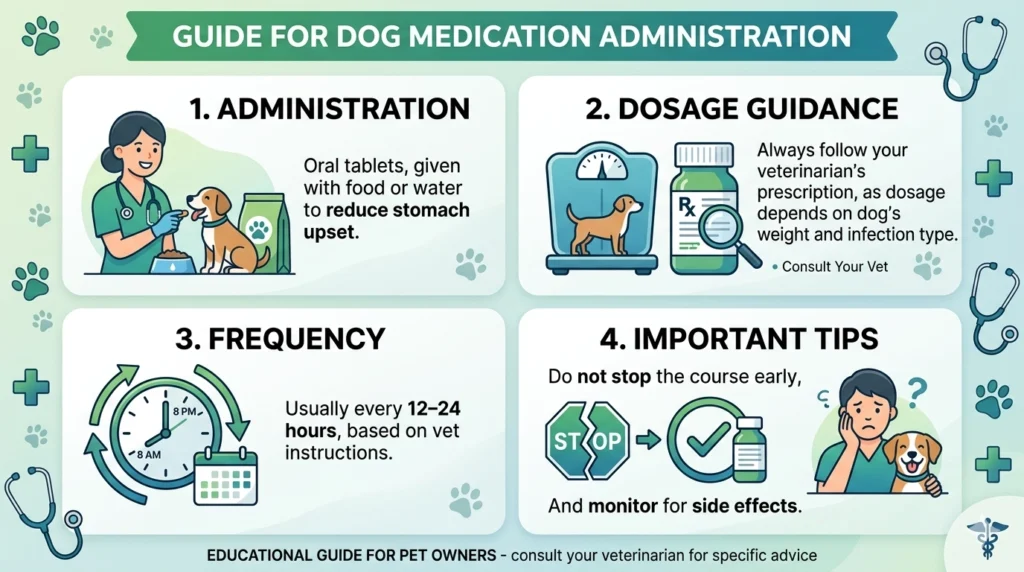
Bactrim ( Trimethoprim/Sulfamethoxazole ) is a broad-spectrum prescription antibiotic, which veterinarians usually administer as a treatment of respiratory infections, urinary tract infections, skin infections, ear infections, gastrointestinal infections, and some forms of diarrhea in dogs. Although it has not been approved by FDA to be used in a veterinary setting, it is generally accepted in clinical practice.
Administration Guidelines:
- Oral administration: Take in form of tablet or liquid suspension/solution with or without food.
- Dosage changes: To prevent stomach upsets and vomiting, administer the following dose with food or as a treat.
- Liquid suspension: Suspend well and refrigeration is not necessary.
- Injectable form: In exotic pets, it is used as an injectable drug (subcutaneously, or into the muscle).
Important Usage Tips:
- Take all the instructions given to you by your veterinarian; never change dosage or quit in the middle.
- Free access to fresh water to avoid dehydration and minimise the risk of the presence of urinary crystals.
- The drug will be effective in 1-2 hours, yet it will be apparent only after several days.
- Human safety measures: When administering sulfas, people who are allergic to it should not have direct contact with it, nor put on gloves.
With such instructions, Bactrim can be safely and effectively used to treat bacteria infections in dogs.
You May Also Like to Read:
- Loxicom Dosage For Dogs Calculator: Safe Dosage Guide & Chart
- Vetmedin Dosage For dogs Calculator: Chart & Safe Guide
FAQs
What Is Bactrim Dosage for dogs (Trimethoprim / Sulphamethoxazole)?
Bactrim for dogs is a prescriptive antibiotic drug that is employed against bacterial diseases in dogs like respiratory diseases, urinary diseases, skin diseases, ear diseases and gastrointestinal diseases. It is not approved by the FDA to be used in veterinarians but it is usually prescribed by the veterinarians.
Which are the brand names of this drug?
A human formulation has Bactrim, Septra, Cotrim Pediatric, Sulfatrim and generic formulations. Tribrissen is a veterinary formulation that has Tribrissen, Tribrissen 400 Oral Paste, Di-Biotic, Uniprim Powder, Tucoprim Powder, and Borgal.
What is the mode of administration of Bactrim dosage?
It is administered oral, either in the form of tablet or liquid, and with or without food. In case of necessity, it is possible to crush tablets and mix them with food. The dogs must always get access to fresh water, as well as injectable types may be administered to exotic pets subcutaneously or intramuscularly.
How many milligrams can be used as a normal dosage to dogs?
The starting dosage is usually 13 mg per pound day which can be administered in two doses. Treatment dosage varies with the kind of infection, the weight of the dog and the response to the treatment.
What do I need to tell my veterinarian before administering this drug?
Report to your veterinarian in case your dog has liver or kidney disease, G6PD deficiency, and is pregnant or lactating. In addition, inform of any other drug the dog is taking including warfarin, aspirin, glipizide or phenytoin.
What are the possible side effects?
The responses to emergency are dyspnea, lip, tongue, or facial edema, hives, abnormal bleeding, or pallor of the skin or eyes. Some of the common side effects are; fatigue, nausea, vomiting, diarrhea, loss of appetite, weakness, and sunlight sensitivity. Long-term treatment might involve checking of blood counts, tear production and thyroid functions.
What would happen in case of a dose missed?
Administer the missed dose immediately the dose is remembered unless the dose is within six hours of administration. Do not administer twice the dosage.
What will I do in the event of my dog overdosing?
Emergency treatment required in the veterinary. Some of the symptoms comprise vomiting, diarrhea, loss of appetite, yellowing of the eyes, bloody urine or coma.
What will I not do in case my dog is on Bactrim for dogs dosage?
Should not be administered to dogs that are allergic to sulfa drugs and should not be exposed to sunlight over a long period of time.
What is the storage of this medication supposed to be?
Keep in a well covered container and stored at room temperature without coming in contact with moisture and heat and out of reach of children and other pets.
Is there a need to monitor treatment?
Yes. To make sure that the medication is working and to identify any side effects early on, your veterinarian can prescribe regular blood counts, tear tests and thyroid functional tests.
Final Thoughts
Bactrim for dogs dosage by weight, a combination of trimethoprim and sulfamethoxazole, is a powerful broad-spectrum antibiotic that is applied in the treatment of different bacterial and protozoal infections of dogs, including respiratory, urinary tract, skin, and gastrointestinal infection. Although it is not approved by the FDA to be used in veterinary practice, it is a very common and widely used medicine that veterinarians prescribe.
Its dual-action effect increases the antibacterial activity, and it is a stable option in the case of complicated infections. The appropriate dosing of 13 mg/lb in day should be used and this should always be under the supervision of a veterinarian to ensure that the dosing is safe and effective. Owners of pets must adhere to administration guidelines, ensure continuous water access, and watch out of the possible side effects that may include allergic reactions, gastrointestinal disturbances, appetite, and behavioral changes.
Monitoring of blood counts, tear production, and thyroid functioning may be necessary to avoid complications in the case of a long-term or repeated use. Also, it should be taken into consideration in interaction with other drugs as well as particular risk factors, including liver or kidney disease, allergies to sulfa, or pregnancy.
In general, in the case of proper use and veterinary control, Bactrim is an efficient and potent treatment means that can assist your dog to overcome severe infections safely and effectively.