Meclizine Dosage For Dogs calculator: Safe Guide & Chart
Meclizine Dosage For Dogs calculator
Weight-based dosing for dogs
© medsdog.com
If Your Dogs can experience motion sickness and all the associated symptoms of vestibular related nausea as well as humans do during car rides, trips on a boat, and even in the home as a result of inner ear problems. Fortunately, there are safe and effective treatments that veterinarians often prescribe to dogs and cats - Meclizine Dosage For Dogs (active ingredient of human motion sickness medications such as Antivert®, Bonine®, Simply Motion®, Travel Sickness®, Bonamine®, Postafen® and Univert®) as an effective, safe treatment for dogs and cats.
Though use of Meclizine For dogs Dosage in veterinary medicine is considered off-label, or not formally approved by the FDA for use in animals, it has become a trusted choice in the prevention and treatment of nausea, motion sickness and vertigo in pets. When given properly under the guidance of a veterinarian, meclizine can greatly help to reduce the discomfort, improve the quality of travel and increase the quality of life of dogs that are prone to motion-related sickness.
In this guide, we'll cover everything you need to know about Meclizine Dosage For Dogs, including how it works, how to dose it, side effects, contraindications, drug interactions, and tips for safe administration. We'll also highlight tools and resources, such as Ask A Vet medication trackers and symptom logs, to assist pet owners with safe and effective use of this medication. Whether your dog is dealing with occasional car sickness or chronic vestibular problems, it's important to know the dosage and precautions of meclizine for dogs to keep your furry friend comfortable and healthy.
Disclaimer: This guide is for informational purposes only and is not a substitute for professional veterinary advice.
Always consult your veterinarian before giving Meclizine or any medication to your dog.
Key Takeaways
- Medication Name: Off-label Name: Bonine®, Antivert®
- Use: Motion sickness - vestibular disorders, and mild nausea -- dogs, cats
- Mechanism: Stops over stimulation of vestibular system of inner ear to combat dizziness, nausea, vomiting and unbalance
- Approval Status: Not Approved For Animals; Prescribed as an Extra-Label Drug by the FDA Required by the PfMA Not Approved For Humans
- Administration: Oral (tablet); typical dose 1mg/kg PO once
- Food Consideration: Can be food given after taking them to minimize the gastrointestinal upset
- Safety: Generally safe; short acting; monitor for mild sedation
- Precautions: Do not use in at-risk pets, or those consuming CNS depressants
- Owner Guidance: Instructions must be clear, successes ought to be monitored, and communications with vet must be made
- Support Tools: Medication tracking tools, nausea tracking, 24/7 veterinary access helps increase patient comfort and owner confidence
This list includes the need-to-know essentials pet owners and pet veterinarians should know to ensure safe and effective use of meclizine in dogs and cats.
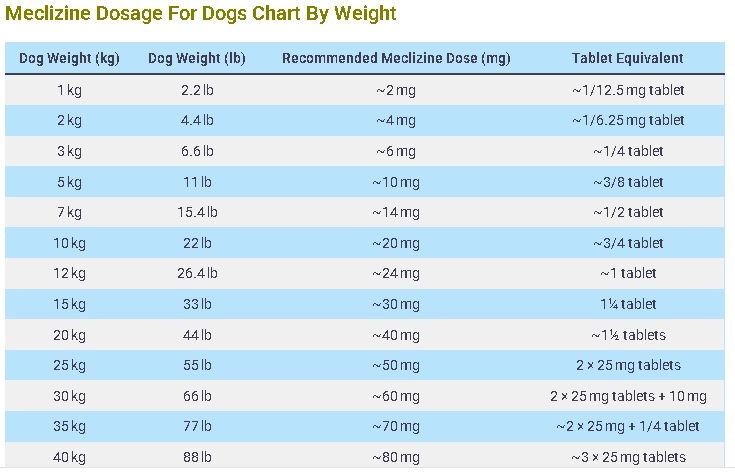
Meclizine Dosage For Dogs Chart By Weight
(Typical once‑daily dosing for motion sickness & vestibular nausea)
| Dog Weight (kg) | Dog Weight (lb) | Recommended Meclizine Dose (mg) | Tablet Equivalent |
|---|---|---|---|
| 1 kg | 2.2 lb | ~2 mg | ~1/12.5 mg tablet |
| 2 kg | 4.4 lb | ~4 mg | ~1/6.25 mg tablet |
| 3 kg | 6.6 lb | ~6 mg | ~1/4 tablet |
| 5 kg | 11 lb | ~10 mg | ~3/8 tablet |
| 7 kg | 15.4 lb | ~14 mg | ~1/2 tablet |
| 10 kg | 22 lb | ~20 mg | ~3/4 tablet |
| 12 kg | 26.4 lb | ~24 mg | ~1 tablet |
| 15 kg | 33 lb | ~30 mg | 1¼ tablet |
| 20 kg | 44 lb | ~40 mg | ~1½ tablets |
| 25 kg | 55 lb | ~50 mg | 2 × 25 mg tablets |
| 30 kg | 66 lb | ~60 mg | 2 × 25 mg tablets + 10 mg |
| 35 kg | 77 lb | ~70 mg | ~2 × 25 mg + 1/4 tablet |
| 40 kg | 88 lb | ~80 mg | ~3 × 25 mg tablets |
| 45 kg | 99 lb | ~90 mg | ~3 × 25 mg + 1/4 tablet |
| 50 kg | 110 lb | ~100 mg | ~4 × 25 mg tablets |
Notes:
- Always have your veterinarian verify the formula/brand (plain Meclizine only) and dose before administration.
- This chart uses a common veterinary range of 0.5–1 mg per pound (1–2 mg/kg) given once daily as a general guideline for motion sickness or vestibular symptoms in dogs.
- For many dogs, veterinarians commonly use around 25 mg once daily as a starting dose, adjusting upward by weight and clinical response.
- Supply tablets are typically 12.5 mg, 25 mg, 30 mg, and 50 mg, requiring tablet splitting for precise dosing.
- Give Meclizine 30–60 minutes before travel or symptom onset for best effects.
What is Meclizine for Dogs
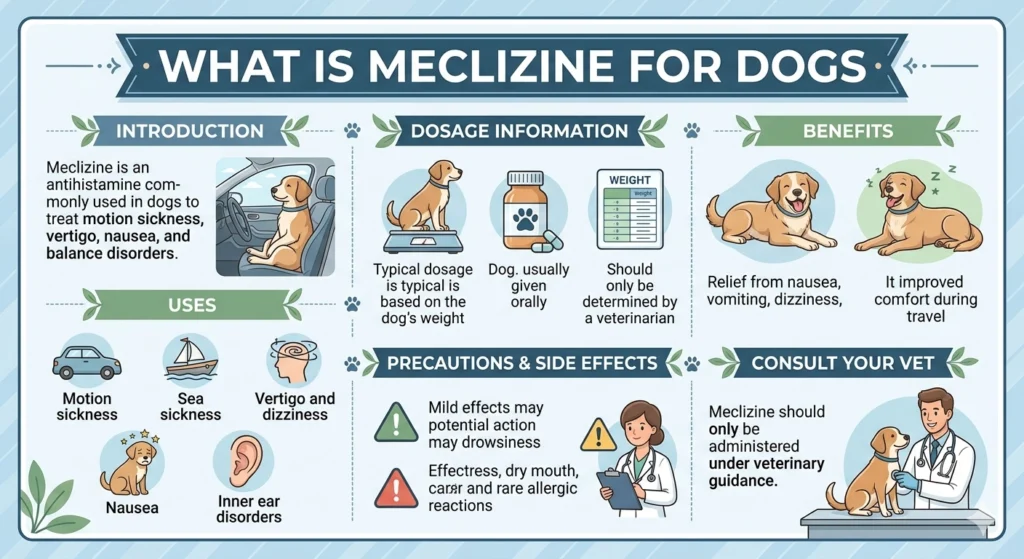
Meclizine dosage for dogs per kg (also known by brand names such as Bonine, Antivert, Bonamine, Postafen, Univert) is an antihistamine that is used in dogs and other small animals to assist with motion sickness as well as vomiting and disorders that affect balance such as vestibular disease. It works by blocking histamine and acetylcholine signals, thereby having an anti-emetic, anticholinergic and a mild central nervous system (CNS) depressant effect. This action helps to prevent nausea, dizziness and vomiting by blocking the communication between the vestibular system (which helps to control balance and motion) and the brain's vomiting center.
Although commonly used in veterinary medicine, meclizine dosage is not approved by the FDA for animals and is commonly prescribed "off-label," which means that veterinarians legally prescribe the medication based on their clinical judgment. It is approved for human use, and is contained in products such as Antivert®, and "less drowsy" motion sickness drugs. In some cases, vets may recommend compounded versions that suit a pet's needs. Meclizine is also found in some veterinary labeled formulations such as NausX® for use in small dogs (note: some formulations for larger dogs may have a different active ingredient).
Always follow carefully the instructions of your veterinarian when using meclizine for dogs.
Uses of Meclizine for Dogs Dosage: Motion Sickness, Nausea & Vestibular Support
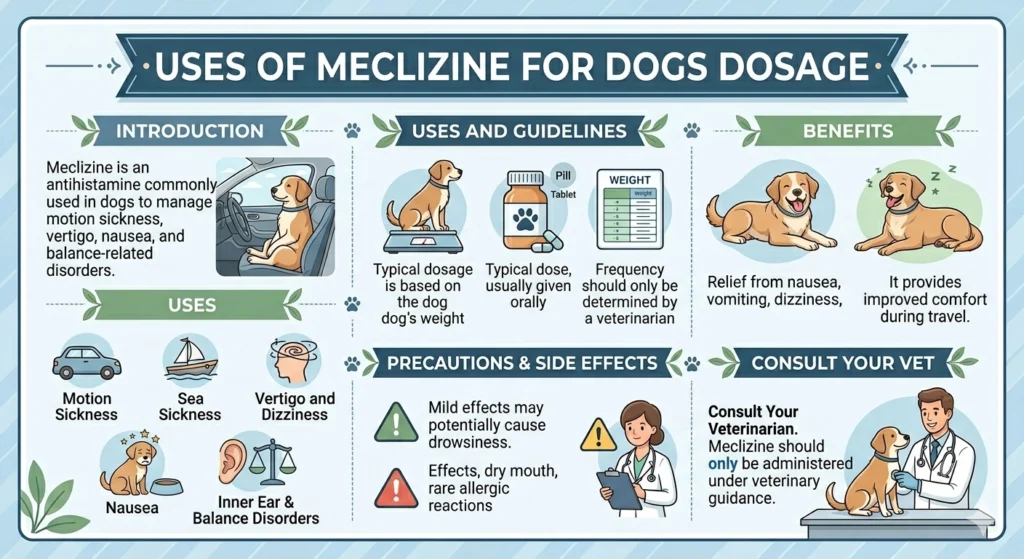
Meclizine dosage for dogs by weight is mainly used in dogs and cats to prevent and soothe motion sickness, so meclizine is particularly beneficial in pets that are subject to nausea, vomiting or discomfort while traveling. It is also commonly used for the control of nausea and dizziness that is not associated with travel, especially in cases of vestibular (inner ear) disease, which is a condition in which disrupted communication between the eyes, ears and brain causes imbalance, vertigo and vomiting.
As an H1 receptor blocker, meclizine works by breaking the communication to the vomiting center (chemoreceptor trigger zone) of the brain from the vestibular system and the gastrointestinal tract, and in effect, meclizine reduces nausea and prevents vomiting. Because of this mechanism, it proves to be beneficial for both motion related and vestibular related symptoms. However, meclizine is not suitable for all dogs, particularly those with certain medical conditions or those taking certain medications, so it is important to consult a veterinarian before using meclizine.
Precautions and Side Effects of Meclizine on Dogs
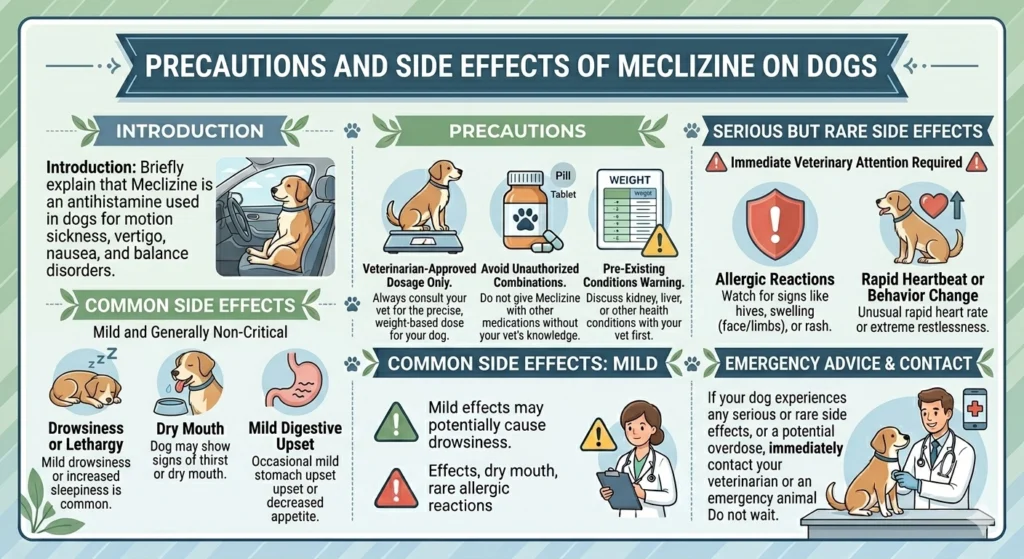
Meclizine is generally safe and effective when prescribed by a veterinarian, but it may cause side effects and should be used with caution in some dogs. It should not be administered in dogs with known hypersensitivity/allergy to the drug. Extra care is required in pets with glaucoma, enlarged prostate, stomach or urinary bladder abnormalities while it is contraindicated in dogs with overactive thyroid, seizure disorders, heart disease or high blood pressure. Meclizine can also interact with other drugs such as heparin, sedatives and tranquilizers, so it is important to get veterinary advice.
Additionally, it also is not advised for pregnant dogs or puppies younger than 6 months of age.
Precautions:
- Avoid dogs with drug allergies or hypersensitivity
- Use with caution in glaucoma, prostate enlargement, stomach or urinary problems
- Avoid in case of thyroid disease, seizures, heart disease or high blood pressure
- Possible drug interactions: heparin, sedatives & tranquilizers
- Not for pregnant dogs or puppies younger than 6 months
- Always speak to a veterinarian before you use
Meclizine Dosage For Dogs side effects are typically mild and temporary, and they often disappear within 24 hours, but the effects may persist for longer periods of time in dogs suffering from liver or kidney disease. However, some dogs can have some noticeable reactions.
Common Side Effects:
- Drowsiness or sedation (Most common)
- Lethargy
- Dry mouth (dry gums)
- Dry eyes
- Increased heart rate
- Loss of appetite
Less Common Effects:
- Vomiting
- Diarrhea
- Hyperactivity/ excitement (CNS stimulation)
In rare instances, there can also be more serious reactions that will require immediate attention from a veterinarian. Overdose can aggravate the symptoms and cause dangerous complications.
Serious Reaction & Signs Of Overdose:
- Extreme lethargy
- Breathing difficulties
- Severe abnormal reactions
- Seizures
- Respiratory depression
Important Notes:
- Most side effects last for 24 hours
- Effects may persist longer in those dogs that have liver or kidney disease
- Discontinue medication and call a veterinarian right away in cases of an abnormal reaction
How Meclizine Dosage For Dogs Is Supplied?
Meclizine dosage is supplied in multiple oral forms and strengths for convenient dosing in dogs. It is commonly available as tablets in 12.5 mg, 25 mg, 30 mg, and 50 mg strengths, as well as 25 mg capsules, allowing flexibility based on the dog’s size and prescribed dosage.
Dosing Information of Meclizine for Dogs
Meclizine dosing for dogs by weight lb or kg should not be done without a veterinarian's guidance any day to ensure safety and legislation. Typical doses include:
Standard Dosing:
- Common fixed dose: 25milligrams once daily, one a day, printed out for a fixed dose, and common flat dose in one of 25 and to do
- Weight-based dose: 1mg/kg orally (PO) once, 30-60 minutes prior to travel or development of vertigo symptoms
Administration Guidelines:
- Can be administered with or without food; food may be helpful in lessening gastrointestinal upsets
tersely discriminating guideline-stated: * If a dose is missed, take as soon as possible if it is near the next scheduled dose - don't double up - Duration of treatment depends upon the condition, response to the medication and if there are any side effects
Important Notes:
- Never give Meclizine without vet. advice
- Finish the full course prescribed even if the symptoms reduce, in order to avoid a relapse
Meclizine Administration
Meclizine dose is administered to dogs orally in tablet form and can be administered with or without food, although administering it with a small meal or treat may help to prevent vomiting and make it easier for dogs to take meclizine. The medication is generally used for motion sickness (e.g. car, boat, or plane travel), vestibular disease (causing dizziness and nausea) and other mild cases of nausea as prescribed by a veterinarian.
For motion sickness, meclizine should be administered 30-60 minutes prior to travelling, with anti-nausea effects normally lasting for 3 to 6 hours. It is relatively fast acting (usually works in 1 to 2 hours). Dogs who experience car sickness often can safely be treated over the long term with meclizine, especially given the fact that it does not have to be given daily. However, large meals before traveling should be avoided in motion-sick dogs.
For vestibular disease or vertigo, Meclizine Dosage For Dogs by weight is typically is administered once or twice daily, depending on veterinary instructions. The length of time that treatment is given differs depending on the dog's condition with some dogs needing treatment short term and others long term.
Key Administration Points:
- Never deviate from your veterinarian's directions as to how often and for how long to use them
- Given orally as a tablet
- Can be administered with or without food (food may lessen the upset in the stomach)
- Provide 30-60 minutes before traveling or symptom onset
- Effects start within 1-2 hours and last for 3-6 hours
- Typical dosing: 1 mg/kg by mouth
- If a dose is missed, give as soon as possible unless close to the next dose - do not double up
Risk Factors of Meclizine for Dogs
Meclizine is not to be used in dogs that have known allergies or hypersensitivity to the drug. Extra care must be taken in dogs with certain medical illnesses such as an enlarged prostate (prostatic hypertrophy), obstruction of the bladder neck, severe heart failure, angle-closure glaucoma and gastrointestinal obstruction between the stomach and the small intestine. It should also be used cautiously in pregnant or nursing dogs, only under veterinary guidance.
This medication may interfere with skin testing for allergies, so this medication should be stopped 3-7 days before skin testing for allergies. Additionally, meclizine can interact with other medications especially central nervous system (CNS) depressants and anticholinergic medications, which can increase side effects. It is important to tell your veterinarian all of the medications your dog is taking, including vitamins, supplements, and herbal products, to avoid potential interactions and ensure safe use.
How to Store Meclizine for Dogs
Proper storage of meclizine for dogs dose by weight helps maintain the effectiveness and safety of meclizine. It should be stored at controlled room temperature and should be protected from light and moisture. Always keep the medicine in the original, tightly closed container and follow any specific directions on the label, especially for compounded versions of the meds, which may have different storage requirements. For safety sake, make sure the medication is kept in a safe place that children and pets cannot access.
Key Storage Guidelines:
- Store at room temperature (68–77°F / 20–25°C)
- Keep container tightly closed
- Protect from light and moisture
- Follow label directions for compounded medications
- Keep out of reach of children and pets
You May Also Like to Read:
- Enalapril Dosage For Dogs Calculator, Chart & Safe Guide
- Pimobendan Dosage For Dogs Calculator, Chart & Safe Guide
FAQs
With this medication, is it necessary to monitor?
No routine monitoring is often necessary but follow your veterinarian's advice.
What do I do in case of emergency or an overdose?
Contact your veterinarian immediately. If not available, get to an emergency vetting facility.
What if I miss a dose?
Give it the first time that you remember and then continue the normal schedule. Do not give two doses at once.
Is meclizine the identical as dramamine?
Not always. Regular Dramamine® contains dimenhydrinate while "Less Drowsy" Dramamine® contains meclizine.
Is meclizine dosage safe for dogs?
Yes, when prescribed by the vet, but it may not be suitable for dogs with certain conditions or drug interactions.
How long does it take meclizine to work in dogs?
It usually begins working around 1 hour after its administration.
When should I give meclizine before traveling?
Usually before 30-60 minutes before a car ride or travel, as directed by your veterinarian.
Can I administer meclizine without a vet's advice?
No, always check with a veterinarian first to ensure safety and proper dosage.
What are the common side effects?
Drowsiness and dry mouth are common, but severe reactions such as breathing difficulty or excessive sleepiness require immediate veterinary care.
How long does meclizine take to leave your system?
Effects normally last for several hours depending upon the dog and condition being treated.
Final Thoughts
Meclizine is an easily administered and relatively safe drug for the treatment of motion sickness, vestibular disease, and mild nausea in dogs when prescribed by a veterinarian. It is easy to administer, acts fairly quickly, and can be used both short-term (as before travel) and as well, in some cases, long-term (with the supervision of a vet).
However, proper dosing, timing, and following veterinary guidance are crucial to prevent safety and effectiveness. While most side effects are mild and temporary, pet owners should be mindful of possible risks and drug interactions as well as health conditions, which could have an impact on suitability.
If you take responsibility in its use, appropriate storage, and timely action in case something missed, side effects or emergencies occurs, your dog's health and comfort will be provided with the best results.