🐕 Insulin Dosage Calculator For Dogsdogs only
• Always give after a meal, every 12h.
• Initial dose only – adjust by <10% with veterinarian.
• Use ideal body weight if dog overweight.
* This Insulin Dosage Calculator For Dogs is For Educational Perpose Only, Always consult your veterinarian before using Insulin Dosage Calculator For Dogs
© medsdog.com
Managing diabetes in dogs requires careful precision and it takes knowledge and careful monitoring. For Calculating Correct Insulin Dosage You can use Insulin Dosage Calculator For Dogs By Weight.
One of the most important aspects of treatment is the delivery of the correct insulin Dosage for dogs.
Giving too much or too little insulin dosage can result in serious health complications grounded on hypoglycemia or uncontrolled hyperglycemia.
Our Insulin Dosage Calculator For Dogs By weight guide will help pet owners to understand how to safely dose, provide charts for reference and give you some practical tips to make sure your dog’s diabetes is effectively managed.
Understanding Diabetes in Dogs
Diabetes mellitus is a frequent endocrine disorder in dogs, which often is similar to diabetes mellitus in humans, being also usually type 1.
It occurs when the pancreas is unable to manufacture an adequate amount of insulin, or when the body cannot adequately use the insulin it manufactures.
Symptoms may include:
- Over-indulgence in thirst and urination
- Unexplained weight loss
- Increased appetite
- Lethargy or lack of energy
If your dog has any of these signs, it is important to see a veterinarian to get your dog tested and on a plan of care.
Proper insulin dosing is a cornerstone to managing canine diabetes.
How Insulin Dosage Works in Dogs
Insulin Dosage helps to regulate blood glucose levels by permitting the uptake of glucose and use of glucose for energy.
Dogs with diabetes do not have enough insulin to keep blood glucose levels down, which leads to high blood glucose levels.
Helping with the correct dosage of insulin helps:
- Control blood sugar levels
- Avoid diabetes complications such as diabetic ketoacidosis
- Improve overall energy and appetite and improve health
Veterinarians usually give either long-acting (e.g. Lantus, PZI) or intermediate acting insulin (e.g. NPH, Vetsulin) depending on the needs of the dog.
Insulin Dosage Calculator For Dogs: How It Works
The dosage of insulin for the dog is not one-size-fits-all.
Factors as they relate to dosing include:
- Weight of the dog
- Blood glucose levels
- Type of insulin used
- Diet and feeding schedule
- Overall health and condition of other conditions
A Insulin Dosage Calculator For Dogs per pound or kg of dog body weight takes into consideration weight and type of insulin to determine an initial dosage which must be monitored and adjusted with the help of a veterinarian.
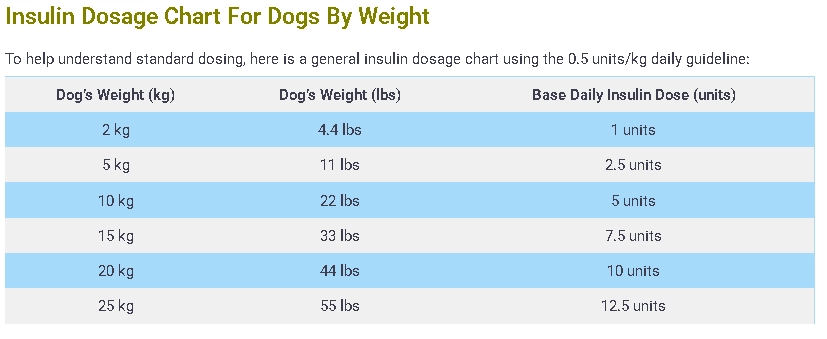
Insulin Dosage Chart For Dogs By Weight
To help understand standard dosing, here is a general insulin dosage chart using the 0.5 units/kg daily guideline:
| Dog’s Weight (kg) | Dog’s Weight (lbs) | Base Daily Insulin Dose (units) |
| 2 kg | 4.4 lbs | 1 units |
| 5 kg | 11 lbs | 2.5 units |
| 10 kg | 22 lbs | 5 units |
| 15 kg | 33 lbs | 7.5 units |
| 20 kg | 44 lbs | 10 units |
| 25 kg | 55 lbs | 12.5 units |
Note: This chart is for the understanding purpose, for more higher or lower weight dogs, please use our Insulin For Dogs Dosage Calculator By Weight which also make adjustments on the basis of glucose level.
Always consult your Vet before make adjustements to your dog’s insulin dose.
Safe Administration Tips for Dog Insulin Dosage
- Consistency is Key
Take insulin at the same time every day in order to keep the blood sugar level constant. - Use Proper Syringes
Use syringes that are suited for the concentration of insulin (U-40 or U-100) and the dose prescribed. - Rotate Injection Sites
Common areas of these include the under the scruff of the neck or the back of the hind leg. Rotation of sites helps in reducing the irritation. - Monitor Blood Glucose
Home glucose monitoring is used to adjust the dose of insulin in a safe manner. - Observe for Hypoglycemia
Signs include weakness, trembling, confusion or epilepsy. Flashing fast sugar (such as honey) should be on hand.
Adjusting Insulin Dosage: When and How
Insulin dosing may thus need to be changed if:
- Blood glucose levels are constantly high or low
- Dog does or undergo weight change(s)
- Dietary changes occur
A vet-guided titration plan makes safe adjustments to prevent dangerous blood sugar swings from occurring.
Key Takeaways
- This insulin dosing is individual and a veterinarian supervision is essential.
- Dosage is affected by weight, type of insulin and health status.
- Using an Insulin Dosage Calculator For Dogs per kg or lb can help in determining doses to start with but it is important to monitor.
- Safe administration, consistency of time, and home glucose checks are very important to the successful management of canine diabetes.
Disclaimer: This guide is for informational purposes only and is not a substitute for professional veterinary advice.
Always consult your veterinarian before giving Insulin or any medication to your dog.
You May Also Like to Read:
- Trazodone Dosage Calculator For Dogs: Chart & Safe Guide
- Methocarbamol For Dogs Dosage Calculator By Weight
FAQs
How often should my dog have insulin Dosage?
Most dogs are given insulin twice a day but the vet will calculate the schedule according to blood glucose monitoring. By using our Insulin Dosage Calculator For Dogs By weight.
What If I Have Given Too Much Insulin?
Overdosing can lead to hypoglycemia, weakness, seizure or even death. Always Follow Veterinary Instructions, This Insulin Dosage Calculator For Dogs Help You to Calculate it Accurately.
Can diet have an impact on the insulin needs?
Yes. Consistent feeding times and a balanced diet help in stabilizing the blood sugar level and this may influence the dosage.
Are all the types of insulin the same for dogs?
No Dogs may receive the NPH, PZI, Vetsulin or Lantus based on their individual needs. Each type has a particular dosing.
Visual Guide: How to Determine the Correct Dose of Insulin Flowchart
| Step | Action |
|---|---|
| 1 | Weigh your dog accurately (kg or lbs) |
| 2 | Input weight into the Insulin Dosage Calculator For Dogs By Weight |
| 3 | Select insulin type (Vetsulin, NPH, PZI, Lantus) |
| 4 | Receive recommended starting dose (U/kg) |
| 5 | Consult your veterinarian to confirm and adjust |
| 6 | Administer insulin and monitor blood glucose |
Final Thoughts
Managing diabetes in dogs is the key to care; paying attention to them and monitoring them often, and getting their insulin dosage perfectly.
Using an Weight Based Insulin Dosage Calculator For Dogs can be a good starting point, but it is important to have veterinary guidance.
By following the right dosage amount, administration on a regular basis, and monitoring, pet owners can help their diabetic dogs live a healthy and active life.